Acoustic panel configurator for manufacturers: features, benefits, implementation
What a 3D configurator does for makers of acoustic baffles, ceiling rafts and wall panels: room planning, colours, quantities, enquiries and how to start.
Short answer: an acoustic panel configurator lets an architect, fit-out contractor or facility manager place your baffles, ceiling rafts and wall panels in a room of their size, choose your colours and formats, and send an enquiry with quantities, areas and a picture of the room. For a manufacturer, it turns a vague "we need something for the noise in our canteen" into an enquiry your team can quote. It does not replace acoustic planning, and it should say so.
This guide is for owners, sales and marketing leads at manufacturers of acoustic baffles, ceiling rafts, wall panels and felt products, and for the dealers and fit-out partners who sell them.

Who buys acoustic elements, and what do they need to see?
Acoustic products are sold into projects, and the people involved rarely think in article numbers. They think in rooms:
- Architects and interior designers choose by appearance first: format, edge, colour, pattern. They need to see how a ceiling of baffles looks from below and how colours combine across a room.
- Fit-out contractors and dealers need quantities: how many elements, how many square metres of material, at which hanging height, with how many suspension points.
- Facility managers, schools and restaurant operators start from a problem in an existing room and want to see a solution that fits under their lights and above their heads.
- Acoustic consultants want your published product data and leave the calculation to their own tools.
That mix makes acoustic elements different from many configurable products. The room is the main input, the result is a layout rather than a single item, and colour is often the deciding factor. A configurator that starts with the room speaks the buyer's language.
What should an acoustic configurator do?
From the maker's side, these functions carry most of the value:
- The room first. Room type and size, with furniture and people for scale, so the buyer recognises their own space.
- Your elements and formats. Baffles, rafts and wall panels with your sizes, thicknesses, edge profiles and materials, and only the combinations you actually make.
- Layout and colour. Patterns, row direction, spacing, hanging height and colour sequences, with the model updating as the buyer changes them.
- Quantities. Element count and material area, generated from the layout instead of estimated.
- Plausibility checks. Most importantly the clear height under the elements, with a suggestion when it is too low.
- An enquiry worth answering. Room, configuration, quantities and a picture, sent to you or to the right dealer.
What can a configurator say about acoustics?
This is the sensitive part. Buyers want to know whether the room will sound better. A configurator can show the absorber area and its share of the ceiling, and it can show an estimate of the reverberation time using Sabine's formula, which relates reverberation time to room volume and total absorption [1]. It is a textbook estimate with known limits: it ignores room shape, and it tends to over-predict reverberation in small rooms with a lot of absorption [1].
Requirements for acoustic quality in rooms are the subject of standards such as DIN 18041:2016-03 in Germany, which covers rooms up to about 5,000 m³ and sports halls up to 30,000 m³ and distinguishes room groups for communication over longer and shorter distances [2]. Whether a room meets such requirements is a matter for acoustic planning. The manufacturer is responsible for its own published product values, and the planner for the design of the room.
A sound approach for a manufacturer's configurator is therefore:
- use your own published, measured values if you want an estimate at all;
- label every estimate clearly as such, in the tool and in the enquiry PDF;
- make no promises about the result in a specific room.
In our demo, every coefficient is an example value and the calculation is labelled "example calculation, not acoustic design" on screen and in the PDF.
What does this look like in practice?
Our acoustic demo is an example configurator with a fictional product and example values, built with our own procedural geometry. No manufacturer ordered, reviewed or endorsed it. It makes no statement on acoustics, fire protection, structure or standards.
Example configurator · fictional product: Acoustic baffle & panel configurator – plan baffles, ceiling rafts and wall panels in an open-plan office, classroom, restaurant or sports hall, with the absorber area and an example reverberation estimate live.
In the demo, the buyer picks one of four room types and sets the room size, then chooses baffles, rafts, wall panels or a combination in felt, foam or fabric-wrapped. Formats, edges, patterns, spacing and hanging height follow, then felt colours as a single colour, alternating, gradient or mix, and wall panels in four patterns. Each change to the room, the elements or the layout lowers the elements on their cables in a wave across the room. A readout shows the absorber area, the share of the ceiling, the clear height below and the example estimate. The clear height is checked, with a one-click suggestion for the hanging height. The review step lists checks and the calculation; the enquiry step produces a text to copy and a PDF with room view and top view [3].
How these rules work in detail is covered in acoustic baffle configurator rules.
What does a manufacturer gain?
We do not promise figures. What we can describe is how a configurator changes the conversation:
- Enquiries with room data. Length, width, height, room type and the chosen layout arrive together, instead of a request for "a few panels".
- Quantities your team can check. Element count and material area come from the layout, so a quote can start from numbers.
- Colour decisions made earlier. Designers can try colour sequences on screen before asking for samples.
- A tool for dealers and fit-out partners. The same configurator can sit on a partner's site and send its enquiries to the right place; routing rules are built per project.
Prices per piece or per square metre are not part of the demo. A manufacturer's own pricing could be added where the business model allows it.
How is it implemented, and where to start?
An acoustic configurator is built from your element dimensions, drawings, colour card and rules, not from a stock model. The core work is the rule set: formats and thicknesses per material, colours per material, spacing and suspension rules, minimum clear heights per room type, and what goes into the enquiry. If you want a reverberation estimate, your published values are needed and the wording must be agreed. Data, colour accuracy on screen and technical choices are covered in implementing a lighting or acoustics configurator; the cost drivers in what a 3D configurator costs.
A good start is one product line that is sold by layout, often ceiling baffles, with two or three typical room types. For how we build configurators in general, see custom 3D configurator development.
Sources
- Wikipedia: Reverberation, section on Sabine's equation and its limits, read 14 November 2026: en.wikipedia.org
- DIN Media: DIN 18041:2016-03, Acoustic quality in rooms – Specifications and instructions for the room acoustic design, read 14 November 2026: dinmedia.de
- Demo features: the "Live in this demo" list on the acoustic baffle configurator library page (read 14 November 2026)
Read next
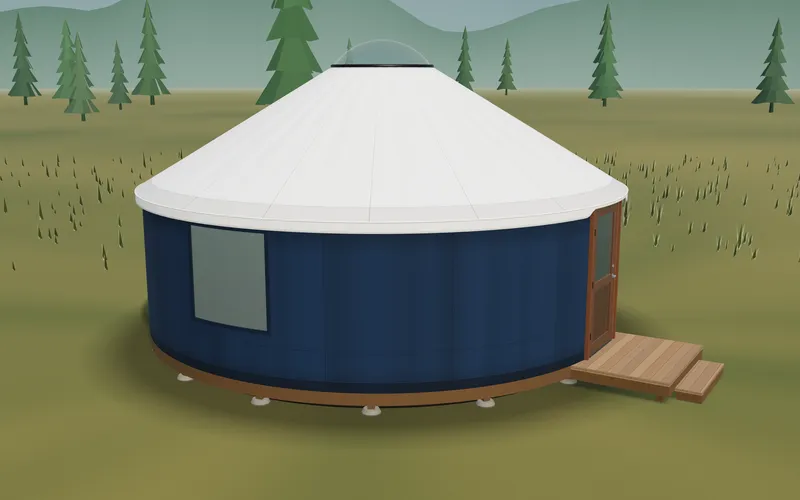
Yurt configurator software for yurt and glamping makers
What a 3D yurt configurator needs: diameter, doors and windows placed around the lattice wall, fabrics, stain, options, a site check and an enquiry.
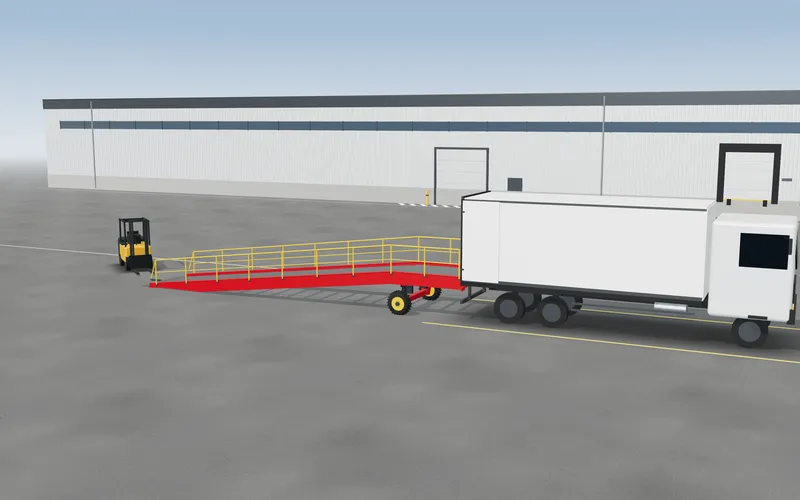
Yard ramp configurator for manufacturers: features, benefits, implementation
What a 3D configurator for mobile yard ramp makers must do: length, bed height, forklift slope, checks, options and an enquiry with a PDF.
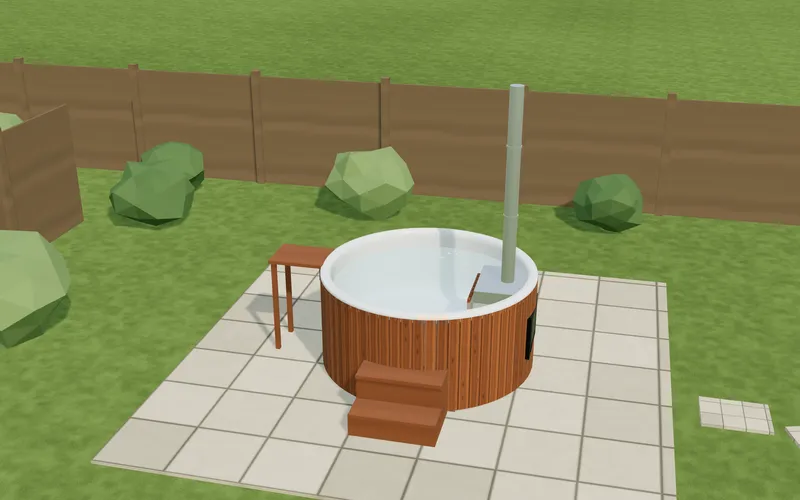
Wood-fired hot tub configurator software for hot tub makers
What a 3D configurator should do for wood-fired hot tub makers: stove type, size, cover, lighting, accessories, a running price and an enquiry.