Backyard studio configurator rules: completion level, delivery area, price and setbacks
The rules a backyard studio configurator needs: price from size and completion level, delivery area, setback check with a 90° turn, porch and units.
Short answer: a backyard studio configurator needs rules in four areas: product (style, line and the sizes that exist for them), service (which completion level at which price), location (which levels are offered inside and outside the delivery area) and site (does the studio fit with setbacks, lengthways or turned?). The price comes not from a pile of options but from size times completion level.

What does the buyer choose?
| Input | In the example | Proposed dependency |
|---|---|---|
| Style | Mono-slope or gable | Sets siding, windows and possible add-ons |
| Line | Two lines | Sets the available size cards |
| Size | Size cards with sample prices | Only sizes of the chosen line |
| Completion level | Kit, assembled shell, turnkey | Price per size and level; availability per delivery area |
| Delivery area | Choice | Controls which levels are offered |
| Porch | Covered porch option | Footprint grows by the porch depth |
| Colours | Siding, door, roof | No effect on price or checks |
| Yard | Fit check with setbacks, turn by 90° | Footprint including porch |
| Units | ft/in or mm | Display only; one unit for calculation |
This is an example configurator with a fictional product; all values are example values. The first two columns follow the "Live in this demo" list on the library page. The dependency column is our proposal for a manufacturer's configurator, not a description of the demo's logic.
How does the price follow size and completion level?
For backyard studios the price list is often two-dimensional: rows are sizes, columns are completion levels, and each cell is a price. We propose using exactly that table as the data source rather than building the price from surcharges:
- One table per line and style. If a size does not exist in a line, the cell is empty and the size card does not appear.
- Empty cells for levels. If a size is not offered turnkey, its card shows only kit and shell.
- Options as separate rows. A porch is a surcharge that can grow with the size. In the enquiry it should be its own line.
- Mark the price as a guide. What the table does not include, such as the foundation, utility connections or transport outside the area, belongs in a fixed line under the price.
The advantage: your team maintains the same table it already uses, and the configurator cannot contradict it.
How does the delivery area become a rule?
The library page lists delivery area and completion level together as one demo feature. A simple rule for a project: inside the area every level can be chosen; outside it only the kit, and the other levels appear greyed out with a reason. A buyer who still wants installation can request a case-by-case check. You decide how the area is defined, by postcode or ZIP code range, region or distance from the plant. A distance calculation usually needs a mapping or geocoding service and therefore a privacy review; a list of code ranges does not.
What matters is what happens to a level already chosen when the location changes. The configurator should not change it silently, but say that turnkey is not offered there and propose the nearest available level.
How does the setback check work?
According to the library page, the demo checks the studio in the yard with setbacks and lets the building turn by 90°. A robust form of this check: the yard is a rectangle, the setback is a value you set as an example, and the studio fits when its footprint including the porch fits inside the yard with that distance on every side. If it does not fit lengthways, suggesting a turn is worthwhile.
The setback in the configurator is not a legal value. Which distances apply to a lot is set by local rules and differs between jurisdictions. The configurator therefore shows a note you write and points to the local authority; it decides nothing.
Why calculate in one unit only
The demo shows dimensions in feet and inches or in millimetres. We recommend storing every dimension once, in one unit, and converting only for display. Otherwise rounding differences creep in between the screen, the check and the PDF. Sizes sold by their foot dimensions, such as "12 × 16", keep that name even when millimetres are stored underneath.
What data do you supply?
Your price table per line, style, size and completion level; what each level includes, as a short text; your delivery area; porch and colour options; the example setback for the yard check and your note about it; and the units and languages of your markets.
What comes out at the end
The enquiry should state style, line, size, completion level, delivery area, options, colours and the result of the yard check, in the units the buyer chose. In the demo the enquiry text can be copied and downloaded as a PDF; in a project it goes to your sales team by email or webhook.

Example configurator · fictional product
Backyard studio configurator
Plan a backyard studio: mono-slope or gable roof, size cards with sample prices, yard setbacks, completion level, porch and colours – with a build animation and a PDF enquiry.
Try it in the backyard studio configurator. Who such a configurator is for is covered in backyard studio configurator software. How the build animation and the yard plan are implemented is covered in implementing garden building and sauna configurators. For hiring us, see custom 3D configurator development.
Frequently asked questions
How often can prices change?
Whenever needed. Small changes such as new prices are part of the monthly care in the Configurator and Complete packages; larger changes are quoted first.
How does the buyer see what a level includes?
We propose a short fixed text per level next to the choice, repeated in the enquiry and the PDF. The kit buyer then reads that foundation and assembly are theirs, the turnkey buyer what your team takes on.
Does the configurator say whether the studio needs a permit?
No. It shows your note and points to the authority, which decides.
Sources
- Modelwright library: backyard studio configurator, "Live in this demo" list, read 14 November 2026: /en/library/backyard-studio-configurator/
Read next
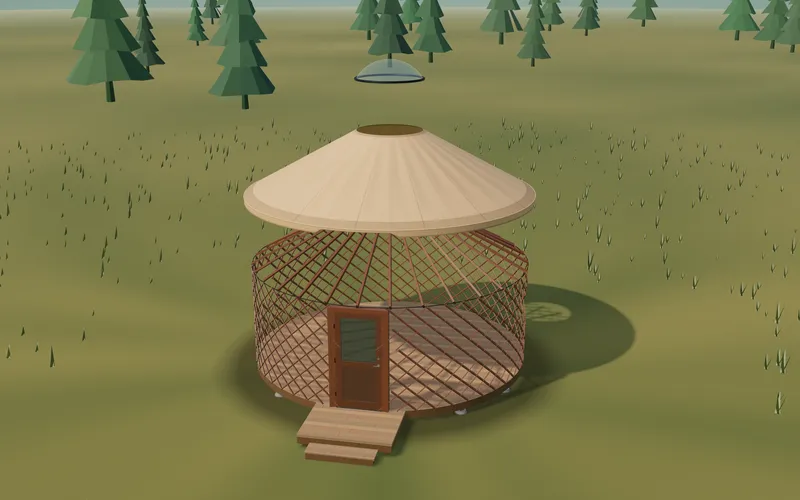
Yurt configurator rules: placing doors and windows on the lattice wall
The rules a yurt configurator needs: wall length per diameter, the space each opening takes, a second door opposite, collision-free dragging, options.
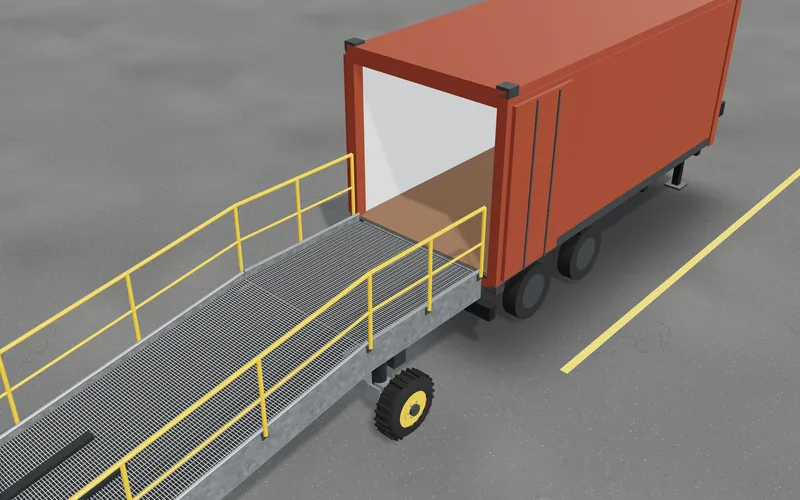
Yard ramp slope, bed height and checks as configurator rules
How a yard ramp configurator calculates slope from length, level-off and bed height, and checks lift range, door opening and forklift clearance.
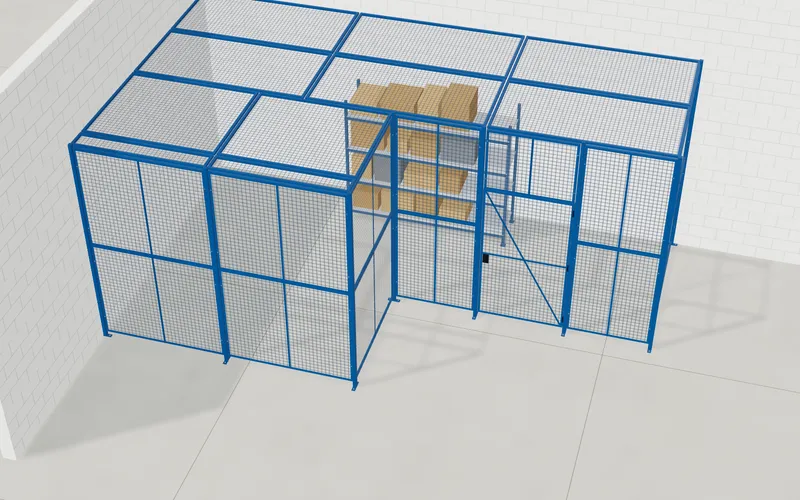
Wire partition planner rules: outline, doors and parts
The rules a wire partition planner needs: outline on a grid, wall lengths, heights, doors and service windows, ceiling and lock, layout checks and parts.