Field shelter configurator rules: bays, L-shapes, mobile units and paddock fit
The rules a field shelter and stable configurator needs: bay limits, L-shaped returns, tack room position, static vs mobile, roofs and paddock fit.
Short answer: a field shelter configurator needs rules in four areas: layout (how many bays, where the return and the tack room go), construction (what a mobile unit on skids can and cannot be), specification (which fronts, gates and roofs go with which construction) and site (does it fit the paddock?). Each rule can be written as a condition, a consequence and a message the buyer reads.

What does the buyer choose?
In our example configurator the inputs are: product type (static or mobile field shelter, stable block, mobile stable), range variant, number of bays in the main run and in an L-shaped return, which side the return is on, tack room position, bay and tack room sizes, overhang, gates, partitions, back guttering, gable vent, towing frame, finish, cladding, roof covering, and the width and depth of the paddock. All values are example values for a fictional product.
Which rules keep the layout buildable?
| Condition | Proposed consequence | What the buyer sees |
|---|---|---|
| The main run or the whole building reaches its maximum number of bays | No more bays can be added | A note that larger layouts are quoted on request |
| A size is typed outside the allowed range | The value is limited | A note that bespoke sizes are quoted on request |
| An L-shaped return is added while the tack room is at the end | The tack room moves to the corner | The plan updates |
| The return is removed | A corner tack room moves to the end of the run | The plan updates |
| A mobile product is chosen with a return in place | The return is taken off; it comes back if a static product is chosen again | A note that a mobile unit tows from one gable end and stays a straight run |
| A mobile product is chosen with a static-only roof covering | The covering is replaced | A note naming the covering that is not offered on mobile units |
| The product has stable doors rather than an open front | Gate and partition choices are hidden | Doors appear in the specification instead |
| The product is mobile | The towing frame choice appears; the base is skids | A tag showing where the unit is towed from |
These are rules we propose for a manufacturer's configurator, not a description of the demo's logic. They show the pattern: rules that a salesperson would otherwise explain in the second phone call become visible in the first minute.
Why do mobile units need their own rules?
A shelter on skids is moved by towing it from a gable end. That is why a configurator can keep a mobile unit as a straight run without an L-shaped return, and reserve some roof coverings for static buildings. Your real rules may be different: a maximum length for towing, a particular skid or frame per size, a ground-anchor kit. Whatever they are, you set them; the demo makes no claim about towing, anchoring or road use.
How does the paddock fit check work?
The library page lists a paddock fit check with a fence. A simple form of it: the buyer enters the width and depth of the paddock, and the configurator places the building in the fenced paddock and compares the footprint, overhang included plus a working margin, with the paddock size. If it fits, the outline is green; if not, red. That answers one question early: does this building have room in this field at all?
It need do no more. Position on the land, distances to boundaries, ground conditions and access remain matters for the site visit. In a project the check could take an irregular paddock outline or a minimum distance to the fence that you specify; that is a proposal, not part of the demo.
How should a configurator handle the planning question?
The demo shows an example planning note; its library page says it is an example and not legal advice. Such a note can differ for static and mobile buildings, point the buyer to their local planning authority and state that it does not check animal welfare or stocking rules. For your project the same principle applies: the configurator shows wording you write and stand behind, and it decides nothing.
What data do you supply?
- Constructions and ranges, with what each includes
- Bay and tack room sizes, and the steps you build in
- The layouts you build, with the maximum bays per run and per building
- Gate and front variants, cladding and roof coverings, with their restrictions
- Your rules for mobile units: frames, skids, lengths, coverings
- Your wording on planning, and any distances you want the paddock check to respect
Where a rule exists only in someone's head, we write it down with your sales team as condition, consequence and message.
What comes out at the end?
The enquiry should list the product, range, layout, bay and tack room sizes, footprint, overhang, base, fronts or doors, roof, cladding and guttering, and ask the manufacturer to confirm sizes, specification, price and lead time. In the demo, the enquiry text can be copied and downloaded as a PDF. In a project the enquiry goes to your sales team by email or webhook.

Example configurator · fictional product
Field shelter and stable configurator
Plan a field shelter or stable: static or mobile, bays and L-shape, tack room, gates and fittings, cladding and roof – with a paddock fit check and a PDF enquiry.
Try it in the field shelter and stable configurator. Who it is for is covered in field shelter and stable configurator software. How the model, animations and phones are handled is in building a configurator for equestrian and livestock products. For hiring us, see custom 3D configurator development.
Frequently asked questions
Are the demo's limits general rules?
No. They are example values. In a project your sizes, limits and exclusions apply.
What about buildings outside the standard range?
The configurator covers your standard range and passes special requests on as an enquiry. A note on full runs and oversize entries that points to an enquiry is enough for that.
Does it check structure or snow load?
No. It applies your product rules. Structural design stays with you as the manufacturer.
Sources
- Modelwright library: field shelter and stable configurator, "Live in this demo" list (read 14 November 2026): /en/library/field-shelter-configurator/
Read next
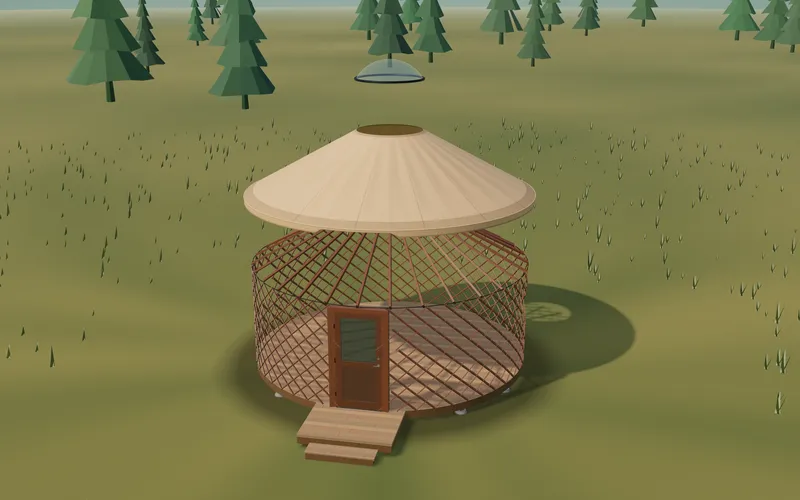
Yurt configurator rules: placing doors and windows on the lattice wall
The rules a yurt configurator needs: wall length per diameter, the space each opening takes, a second door opposite, collision-free dragging, options.
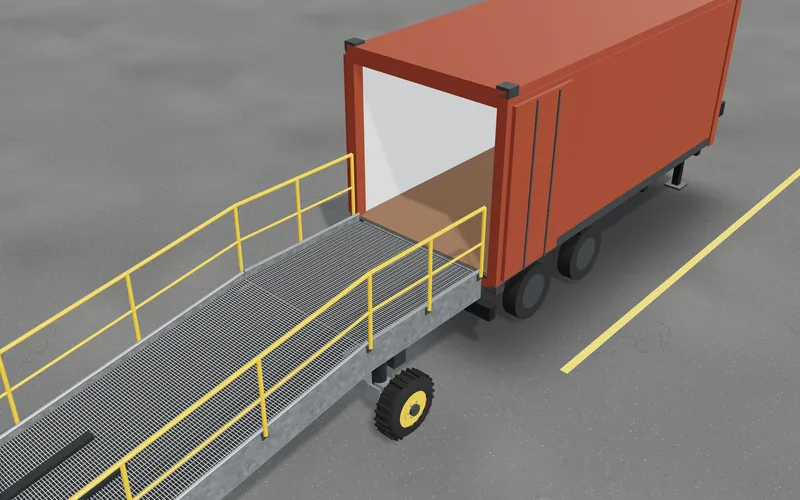
Yard ramp slope, bed height and checks as configurator rules
How a yard ramp configurator calculates slope from length, level-off and bed height, and checks lift range, door opening and forklift clearance.
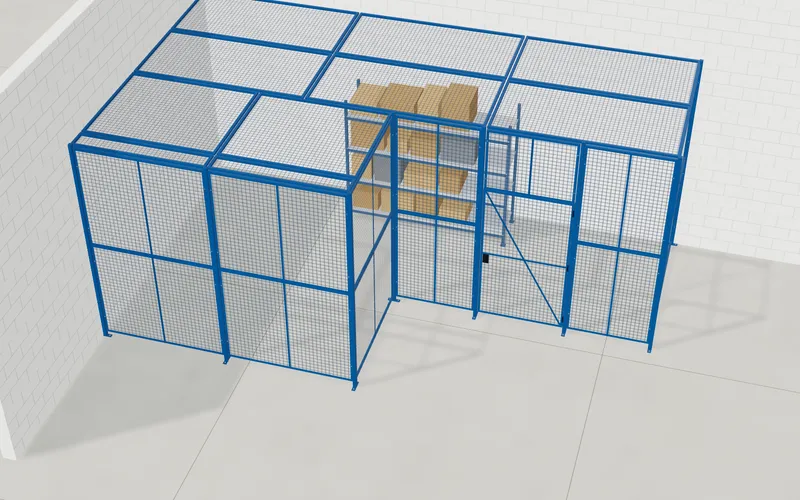
Wire partition planner rules: outline, doors and parts
The rules a wire partition planner needs: outline on a grid, wall lengths, heights, doors and service windows, ceiling and lock, layout checks and parts.