Spiral staircase configurator rules: inputs, riser tables, fit checks and the enquiry
How a spiral staircase configurator turns height and opening into treads, rotation and a landing, which rules it needs, and what the enquiry holds.
Short answer: a spiral staircase configurator works in three layers. Inputs: the buyer enters floor-to-floor height and the opening. Calculation: the maker's riser table turns those into treads, riser height, rotation and the landing position. Rules: checks decide whether diameter, landing and step-off side fit the opening, and which treads, balusters and rails belong to the chosen product line. Every value and every check result then goes into the enquiry.
This guide explains that logic using our spiral stair configurator, an example configurator with a fictional product. Every table, limit and guide value in it is an example value, not manufacturer data. For your product, your own tables and rules apply. For the business case, see staircase configurators for spiral stair manufacturers.

Which inputs does the configurator need?
| Input | Example values | Used for |
|---|---|---|
| Product line | several fictional lines with different materials and construction | material, treads, rails and diameters |
| Application and site | residential, commercial, industrial; interior or exterior | interior or exterior decides which treads and rails are allowed; the application goes into the enquiry |
| Floor-to-floor height | typed, or stepped with plus and minus | number of treads |
| Upper floor | square hole, round hole, or balcony / deck face | fit check for diameter and landing |
| Diameter and step angle | diameter list, narrower for one line; three step angles | footprint and rotation |
| Direction, start and step-off side | clockwise or counter-clockwise; back, right, front, left | where the climb starts and ends |
| Units | ft/in or mm | entry and display in the buyer's units |
How are treads, rotation and the landing worked out?
The core is a riser table. For each step angle it maps height ranges to a number of treads. In the example, treads plus the landing give the number of risers, with the landing as the last riser. From there:
- Riser height = floor-to-floor height ÷ number of risers.
- Rotation = number of treads × step angle.
- Landing position follows from rotation, direction and the start side.
- Column height = floor-to-floor height + rail height.
Why a table and not a formula? Because a maker who keeps tread counts as a table wants the configurator to use exactly that table. When the table changes, a data file changes, not the code. In the example, riser tables, diameter lists and guide values sit in their own data file, separate from the application logic.
The 3D stair is rebuilt from these values on every change: column, treads, landing, balusters and handrail follow the new helix. One pre-built model per variant would be impossible to maintain at this number of combinations.
Which rules does it need?
1. Fit against the site
The configurator compares diameter and landing with the opening or the deck face. When something does not fit, the check turns red and names the reason, for example "Diameter too large for opening" or "Landing does not fit". It then offers a fix: use a fitting diameter, open the floor, flip the rotation, change the start side, or widen the deck face. The fit check is labelled as an estimate.
2. Rules of the range
| Condition (example) | Consequence |
|---|---|
| "All wood" line chosen | site set to interior, with a note |
| Exterior site | wood treads and wood rails not offered |
| Galvanising chosen with aluminium or stainless steel | finish reset to bare metal, with a note |
| One of the lines | narrower diameter range |
| Product line changed | only that line's treads, balusters and rails offered |
3. A switch for stricter rules
The demo has a toggle for stricter example rules: one step angle only, a shorter diameter list and balusters at a closer spacing. The summary marks it "to be confirmed by the manufacturer". On a real product, a switch like this might separate residential from commercial jobs. The values behind it are yours to set and sign off.
What does the guide-value check show?
The review lists seven values, each "within" or "outside" an example guide value: riser height, clear width (estimated), tread depth at the walk line (estimated), headroom (estimated), step angle, diameter and baluster spacing. All seven also go into the enquiry text.
Example guide values, not a code check. The values that apply to a real stair come from the standards and building rules of each market, for example DIN 18065 in Germany [1]. The manufacturer and the structural engineer are responsible for them. A configurator can show such values only if the manufacturer provides and approves them.
What goes into the enquiry?
In the example the summary contains: product line, application and site, floor-to-floor height, upper floor layout, diameter, stricter rules yes or no, riser table with treads and riser height, rotation and direction, start and step-off sides, landing with rail type and height, column height, balusters, handrail, treads, material and finish. Below follow the guide values and blank lines for name, email or phone and the project's ZIP code.
The buyer can copy the text or save a PDF. Nothing is sent from the demo; in a project the enquiry goes to your sales team by email or webhook. The fields a sales team needs are covered in enquiries and site surveys for stairs and balconies.
A rule sheet to send us
- Product lines with materials, diameters and step angles
- The riser table for each step angle (height range, number of treads)
- Treads, balusters, handrails and finishes per line
- Exclusions, such as interior only or steel only
- Values to check against, with your sign-off
- The fields your sales team needs in every enquiry
With that sheet we can estimate the build. For how we work, see custom 3D configurator development; for the technical side, building a 3D configurator for stairs and balconies.
Sources
- DIN Media: DIN 18065:2020-08, Gebäudetreppen – Begriffe, Messregeln, Hauptmaße (read 14 November 2026): dinmedia.de
- Demo features: library page and the demo itself (read 14 November 2026): /en/library/spiral-stair-configurator/
Read next
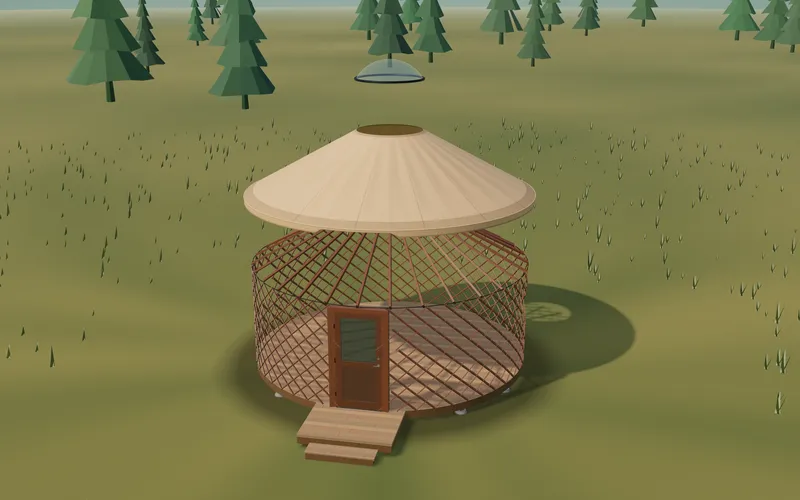
Yurt configurator rules: placing doors and windows on the lattice wall
The rules a yurt configurator needs: wall length per diameter, the space each opening takes, a second door opposite, collision-free dragging, options.
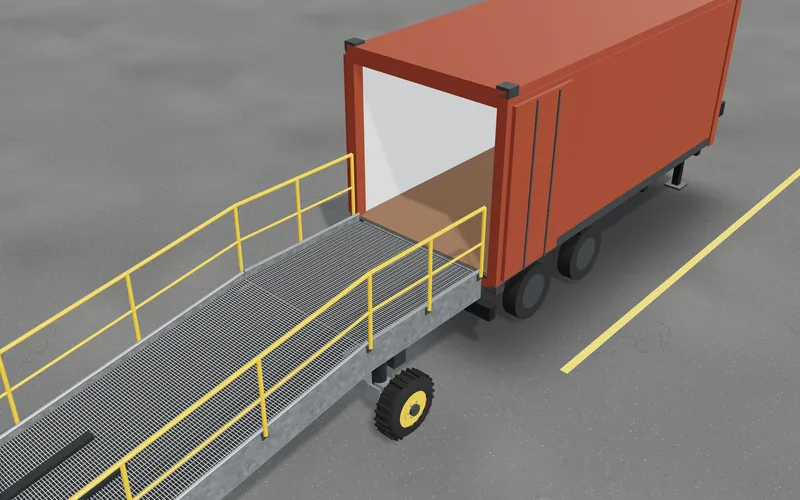
Yard ramp slope, bed height and checks as configurator rules
How a yard ramp configurator calculates slope from length, level-off and bed height, and checks lift range, door opening and forklift clearance.
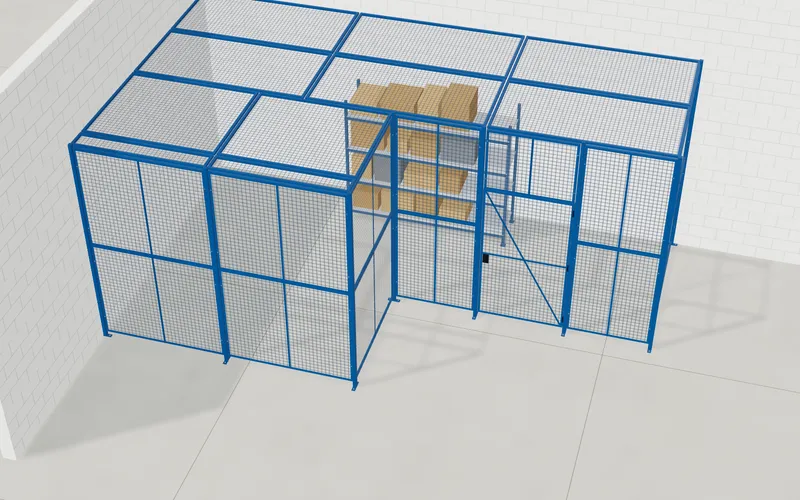
Wire partition planner rules: outline, doors and parts
The rules a wire partition planner needs: outline on a grid, wall lengths, heights, doors and service windows, ceiling and lock, layout checks and parts.