What does a stair or balcony configurator cost? Scope, cost drivers and buying checklist
What a 3D configurator costs stair and balcony makers: which scope fits which package, what drives the price, and what to settle before asking.
Short answer: the cost of a stair or balcony configurator depends mostly on whether it only shows the product, links options with rules, or calculates and checks from measurements. At Modelwright, a 3D view of one product family (Package A, up to two models) starts at EUR 1,990 one-time, a configurator with rules and an enquiry at EUR 5,400 one-time plus EUR 199 a month, and the Complete package, the full scope for your range, at EUR 8,880 one-time plus EUR 249 a month. All prices exclude VAT; the binding fixed price follows the first exchange.
This guide is for managing directors and buyers at manufacturers of stairs, railings and balconies. It maps our packages onto the questions these products raise and names the cost drivers that weigh more here than elsewhere. The examples are the two configurators in this group, the spiral stair configurator and the bolt-on balcony configurator, both with fictional products and example values. For every cost factor in general, and the prices other vendors publish, see what a 3D configurator costs.

Which scope fits which package?
| Package | Price (excl. VAT) | Included | For stairs and balconies, for example |
|---|---|---|---|
| Package A (viewer) | from EUR 1,990 one-time; hosting by us optional at EUR 19 a month | a 3D view of one product family with up to two models, embedded in your website | your spiral stair or a balcony type in 3D, with no dimension input and no rules |
| Configurator | from EUR 5,400 one-time + EUR 199 a month | your options and rules for one product family; a summary and an enquiry carrying the full configuration, by email or webhook; monthly hosting, care and small changes up to 1 hour | one product line with options, exclusions and a complete enquiry |
| Complete | from EUR 8,880 one-time + EUR 249 a month | the full scope for your range; the exact scope is in the fixed-price quote | several lines or types |
For Configurator and Complete, the monthly fee is part of the package. Care runs for at least 12 months from go-live and can then be cancelled monthly; in Complete it covers small changes of up to 2 hours a month. The exact scope is set out in writing in the fixed-price quote.
The pilot: for EUR 2,900 one-time (excluding VAT, fixed price) we build a configurator for one product family from your data in six weeks and check with you whether buyers and your sales team use it. If you order the configurator within 60 days after the pilot, the full EUR 2,900 is credited.
What does the first year cost?
Because care runs for at least 12 months, the first year is the useful number. At entry prices, excluding VAT:
| Route | One-time | 12 months of care | First year |
|---|---|---|---|
| Package A, no hosting | EUR 1,990 | – | EUR 1,990 |
| Package A with hosting | EUR 1,990 | 12 × EUR 19 = EUR 228 | EUR 2,218 |
| Configurator | EUR 5,400 | 12 × EUR 199 = EUR 2,388 | EUR 7,788 |
| Complete | EUR 8,880 | 12 × EUR 249 = EUR 2,988 | EUR 11,868 |
| Pilot, then Configurator within 60 days | EUR 2,900 + EUR 2,500 (EUR 5,400 less the EUR 2,900 credit) | 12 × EUR 199 = EUR 2,388 | EUR 7,788 |
These are entry prices; the fixed price for your project may be higher, depending on the cost drivers below. The pilot does not change the total if you order in time, but it spreads the risk: you pay EUR 2,900 first and decide after six weeks.
Where do the two examples sit?
Both demos go beyond picking options. The stair demo works out treads, rotation and landing from floor height and opening, checks the fit and compares with guide values. The balcony demo plans a whole facade with layout rules, limits per type, a shadow calculation and an installation animation. Which package a project with a calculation step, checks or an installation view needs is set in the fixed-price quote. A single product line with options, rules and an enquiry matches the description of the Configurator package.
What drives the cost for stairs and balconies?
Six factors weigh heavily with these products. We do not price them individually here; they go into the fixed-price quote.
- Calculating rather than choosing. Whether the buyer picks a size, or the configurator derives the stair or the layout from measurements, is the biggest single difference in effort.
- Number of lines and types. Each product line or balcony type brings its own tables, limits and geometry.
- Depth of rules. Exclusions between options are simple. Rules between neighbouring positions on a facade, or fit checks against an opening, need more logic and more test cases.
- Your details. Generic geometry is quicker to build than your sections, brackets and connections. How much detail you need depends on how clearly your product should stand apart in 3D.
- Markets. Each extra language and each unit system (mm or feet and inches) touches the interface, the enquiry and the PDF.
- Enquiry path. Email to one address is the simple case. Routing to dealers or handing enquiries to a CRM is assessed per project; see enquiries and site surveys for stairs and balconies.
One thing lowers cost: complete, signed-off source material. If riser tables, size ranges and exclusions already exist as a table you have approved, nobody has to reconstruct them in workshops. For safety-relevant products that sign-off is required anyway: the values the configurator checks are the responsibility of you as the manufacturer, together with the structural engineer, not of the configurator.
Off-the-shelf software or a custom build?
Some configurator software lets you load your own products into templates. It pays off when your product fits those templates. For stairs and balconies that is usually the deciding question: can the software derive a helix from height and opening, treat a facade as a grid, and enforce your rules between neighbouring positions? If not, a custom build is the remaining route. We do not offer a self-service editor as standard; small changes are part of the monthly care. For how template software compares in a neighbouring market, see configurator software for sheds, carports and pergolas.
What happens when the contract ends?
For buyers this matters, because stair and balcony tables and rules are maintained for years. At Modelwright, you receive your data and models as files (glTF, JSON) when the contract ends. With Package A, hosting by us is optional and the view can run on your own server. Ask every vendor, us included, to state in writing in which format tables, rules and models are handed over at the end.
Checklist before you ask for a quote
- Which product line or balcony type goes first, and why that one?
- Should buyers choose sizes, or should the configurator calculate from measurements?
- Are tables, limits and exclusions written down, and who signs them off?
- Which checks should the configurator show, and how are they labelled?
- Who receives the enquiry: inside sales, dealers, project managers?
- Which languages and units do your markets need?
- Where does the configurator run: its own page, your website, your shop?
- Who looks after it after launch, and how often do your tables change?
The technical side is covered in building a 3D configurator for stairs and balconies; how we work is on custom 3D configurator development.
Common questions
We make stairs and balconies. Do we need two configurators?
Usually, yes: inputs, rules and enquiries differ. The stair calculates from two site measurements; the balcony plans a facade. Start with the product that causes the most back-and-forth today.
Should the configurator show a price?
That is your call. Neither demo shows one. If you want to show your pricing logic, we set up your price rules in the project.
Sources
- Prices and package contents: Modelwright, "What a 3D configurator costs" (read 14 November 2026): /en/guides/3d-configurator-cost/
- Demo features: library pages (read 14 November 2026): spiral stair, bolt-on balcony
Read next
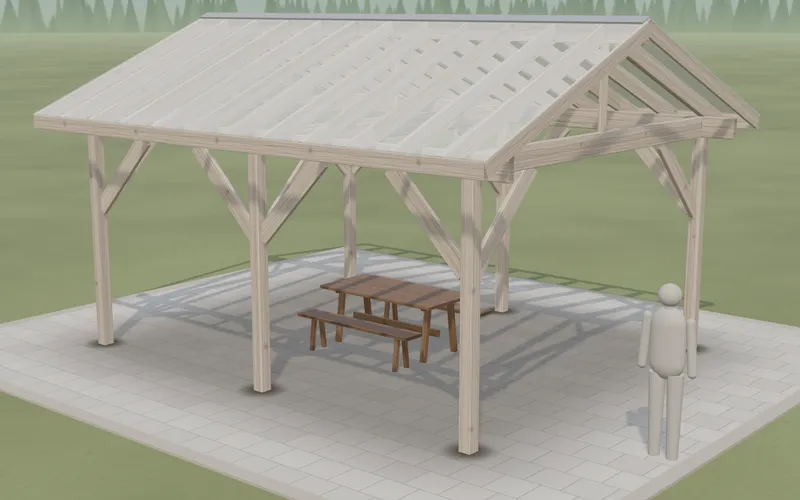
Configurators for halls, pavilions and modular buildings: scope, cost drivers and worked examples
What drives the cost of a configurator for steel halls, pavilions, guard booths, restroom blocks and site cabins, with year-one and three-year examples.
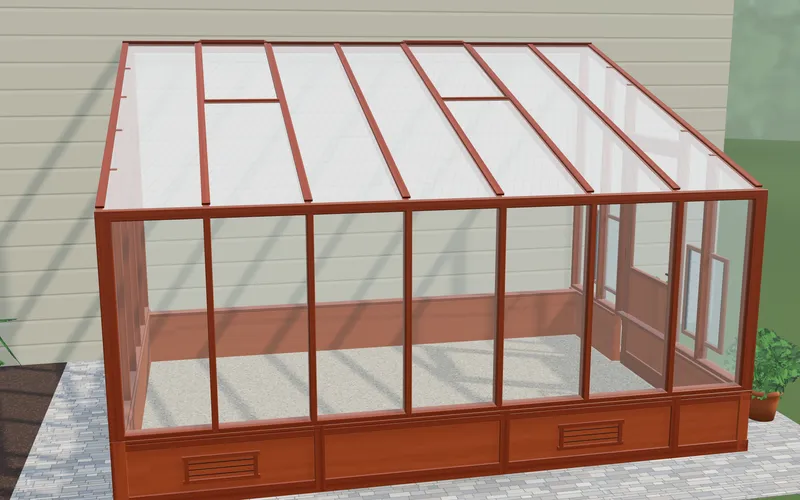
Configurator cost for garden buildings, glamping and saunas: cost drivers, worked examples, buying questions
What makes a configurator for garden buildings, glamping structures or saunas cost more, three worked examples over three years, and buying questions.
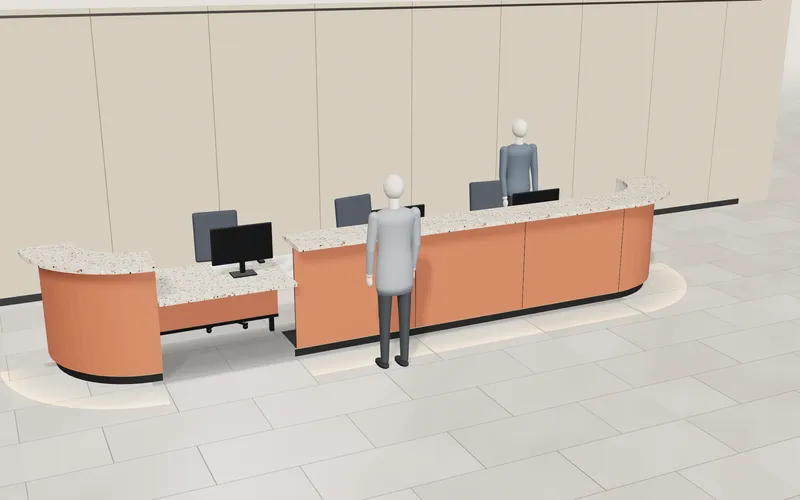
Furniture configurator cost: cost drivers, worked examples and buying questions
What makes a configurator for furniture, kitchens and contract or hospitality interiors cost more, three worked examples over three years, buying tips.