Furniture configurator cost: cost drivers, worked examples and buying questions
What makes a configurator for furniture, kitchens and contract or hospitality interiors cost more, three worked examples over three years, buying tips.
Short answer: for furniture and interiors, three things drive the effort of a configurator most: how many materials (fabrics, fronts, decors) must look right and be maintained; whether the product is shown in a room with checks; and whether the geometry is modelled or built from rules. Packages and starting prices are set out in what a 3D configurator costs; this guide applies them to three typical furniture projects over three years.
It is written for owners and buyers at makers of upholstered, office, kitchen and shelving furniture, of contract and hospitality seating and counters, and at fit-out firms. Eight example configurators with fictional products and example values serve as illustration, among them the modular sofa in your own room, the living room cut-away and the café floor plan; the other five are listed below.

What drives cost in furniture and interiors?
On top of the factors that apply to any configurator, seven weigh heavily for furniture. The examples come from our demos:
| Factor | In the demos | Where the effort comes from |
|---|---|---|
| Material library | sofa: linen, bouclé and velvet, each with its own texture and sheen; booth seating: 15 cover colours | each material family needs texture, roughness, sheen and a check against the swatch; every season brings new colours |
| Upholstery and organic shapes | sofa modules with welts and seat dips, office chair parts | modelled by hand; every new shape is new modelling work |
| Grids and modules built from rules | kitchen, shelving, booth seating, reception desk | build rules and constraints must be fully described and tested |
| Room context with checks | sofa: door and delivery; booths: aisle; desk: space per workstation | every check brings a rule, a plan view, a message and test cases |
| Plans and PDF | booth seating and reception desk: PDF with 3D view and plan | plans, dimension chains and captions must read on screen and on paper |
| Pricing logic | sofa: example price from module prices with a mark-up per fabric family and seat depth | every valid combination needs a price; price groups need upkeep |
| Several sales routes | shop with prices, contract enquiry, dealers | each route adds fields, outputs and recipients |
Ready-made tables bring the cost down: if module lists, planning values and fabric groups exist and samples or scans are to hand, none of it has to be pieced together during the project. A narrow first collection helps too: ten or a hundred cover colours make little difference to the logic but a real one to checking and upkeep.
What do three typical furniture projects cost over three years?
The tier assigned to each project is our assumption; only the fixed-price quote is binding, and it may sit above the starting price. Configurator and Complete carry a monthly fee for at least 12 months from go-live. All amounts are net, excluding VAT.
Example 1: office chairs, showing first
An office furniture maker wants to show two chair models with covers and frame colours on its website, without prices or an enquiry. Package A fits: from €1,990 one-off, up to two models, with our hosting optional at €19 a month.
- Without our hosting: €1,990 one-off
- With hosting, three years: €1,990 + 36 × €19 = €2,674
Example 2: modular kitchen with an enquiry, via a pilot
A kitchen maker wants layout, grid, fronts and worktops, ending in an appointment or quote request. We assume the Configurator tier (from €5,400 one-off, €199 a month), preceded by a €2,900 pilot that is credited in full if the configurator order follows within 60 days.
- One-off remaining after the pilot: €5,400 − €2,900 = €2,500
- First year in total: €5,400 + 12 × €199 = €7,788
- Three years: €5,400 + 36 × €199 = €12,564
With a timely order the pilot leaves the total unchanged, but it lowers the risk: showroom and sales see, with their own fronts, whether prospects use it.
Example 3: contract banquettes with a room check and PDF
A maker of restaurant banquettes and booths wants layouts, lengths, backs and covers, a room check with covers and aisle width, and an enquiry with PDF. We assume the Complete tier (from €8,880 one-off, €249 a month).
- First year: €8,880 + 12 × €249 = €11,868
- Three years: €8,880 + 36 × €249 = €17,844
A price table per module or running metre would be an extension, scoped in the quote.
None of the three examples includes your team's time or extensions such as dealer routing, a CRM hand-over, extra languages or product images per variant rendered from the 3D model, which furniture makers can use instead of a photo shoot for each new colour. If you need them, the fixed-price quote sets out their scope.
Where does the project need your people?
In furniture, in three places. Product management approves modules, sizes and exclusions. Someone supplies fabric and decor samples or scans and checks on screen that colours and textures are right. Sales says which details are missing from enquiries and which planning values for aisles, covers or workstations should apply. Plan more review rounds for materials than for geometry, because colour and texture on screen are compared with the real swatch.
What first, what later?
- Upholstery: one range, one fabric group per family, room and door checks; more fabric groups and prices later.
- Kitchens: one front line, single run and L-shape; island, appliance choice and room input in a second stage.
- Shelving: one grid with the rules that come up in sales conversations today, plus a parts list; prices later.
- Cafés and hospitality: templates rather than calculated layouts, seat count per template; room input later.
- Banquettes and counters: the most common layouts with a room check and PDF; special shapes and prices later.
Write the later stages into the specification anyway, so the data structure is ready for them from day one.
What should you settle before ordering?
- Who supplies and approves the materials? Agree whether scans, samples or colour values are the basis, and who signs off the look.
- What does a new collection cost? For Configurator and Complete, small changes such as new colours or text are part of monthly maintenance (up to 1 or 2 hours a month); a new model line is quoted separately.
- Who owns the planning values? Aisle widths, clearances and cover counts come from you or your designer; the configurator applies them.
- Shop, dealer or contract? Each extra route adds fields, outputs and recipients; decide the order.
- Do we need prices? Price groups per fabric or decor are maintenance work. An enquiry without a price is often the faster start.
- Do we already use industry data or a platform? Then your own configurator complements it rather than replacing it. How configurators, CPQ and platforms differ is set out in 3D configurators for manufacturers.
The other examples

Example configurator · fictional product
Office chair configurator
An office task chair: mesh or upholstered back, covers, base, armrests and headrest – with adjustable seat height, synchro mechanism and an exploded view.

Example configurator · fictional product
Modular kitchen configurator
Plan a modular kitchen: single run, L-shape or with island, run length on a 60 cm grid, fronts, handles and worktop – with opening fronts and the carcass build-up.
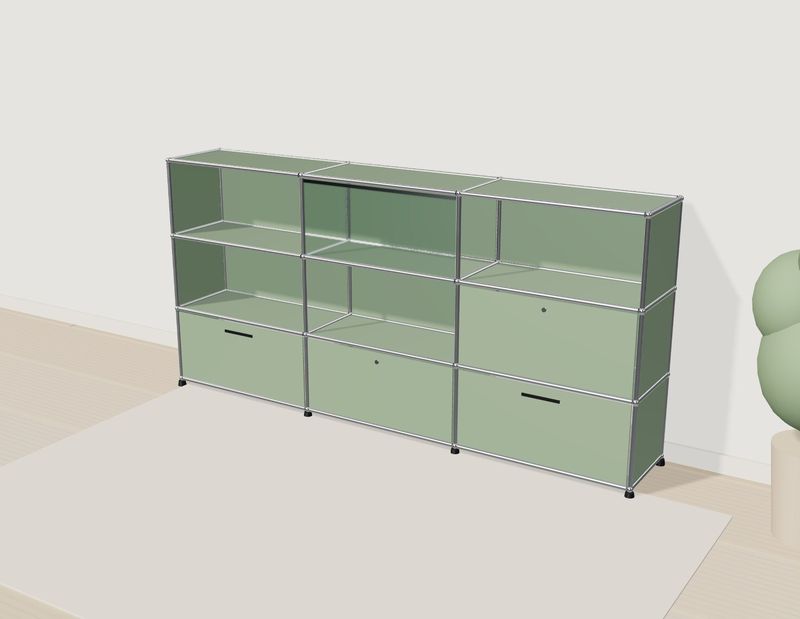
Own demo · fictional product
Shelving configurator
A modular shelf: change the grid, fronts and colours, or click a compartment in 3D. The parts list keeps up.

Example configurator · fictional product
Booth & banquette seating configurator
Plan restaurant banquettes and booths: choose layout, length, back and cover, and see in plan at once how many covers fit and whether the aisle stays wide enough.

Example configurator · fictional product
Reception desk configurator
Plan a reception desk: choose shape, modules, raised top and front, and see in the plan at once whether every workstation has enough space and reach.
Next step
The route from enquiry to sales team, dealer or fit-out partner is covered in furniture configurator enquiries and dealers; the technical side in furniture configurator implementation. The project process is described under custom 3D configurator development.
Frequently asked questions
We make sofas and shelving. Do we need two configurators?
Usually yes: the sofa needs room, door and fabrics; the shelving needs a grid, rules and a parts list. Materials, enquiry route and hosting can be shared; the quote sets the scope for both.
Does showing more fabric colours cost more?
Within one material family hardly, because a new colour is a colour value. A new family with its own texture and sheen means work on the material and its sign-off.
What happens with the next collection?
New colours in an existing material family count as small changes under monthly maintenance (up to 1 or 2 hours a month). A new model line or material family is quoted as its own scope.
Sources
- Modelwright: what a 3D configurator costs, packages, pilot and monthly fee, read 14 November 2026: modelwright.de/en/guides/3d-configurator-cost/
- Example configurator features: "Live in this demo" lists on the library pages and the demo source code, read 14 November 2026: modelwright.de/en/library/
Read next
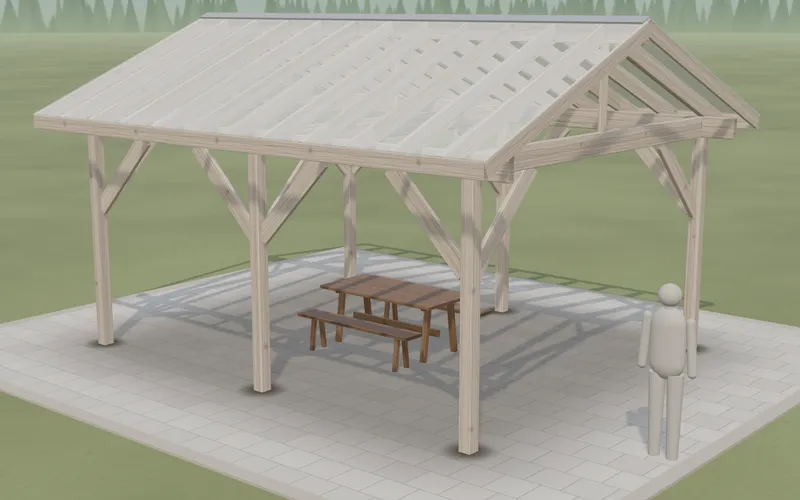
Configurators for halls, pavilions and modular buildings: scope, cost drivers and worked examples
What drives the cost of a configurator for steel halls, pavilions, guard booths, restroom blocks and site cabins, with year-one and three-year examples.
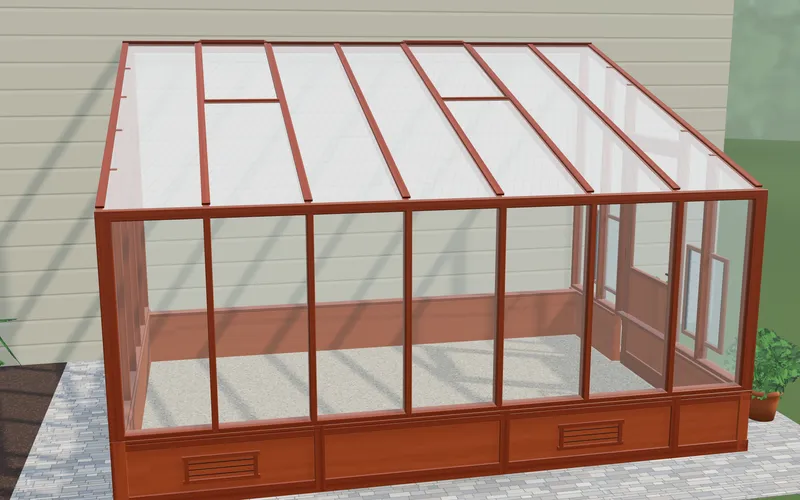
Configurator cost for garden buildings, glamping and saunas: cost drivers, worked examples, buying questions
What makes a configurator for garden buildings, glamping structures or saunas cost more, three worked examples over three years, and buying questions.
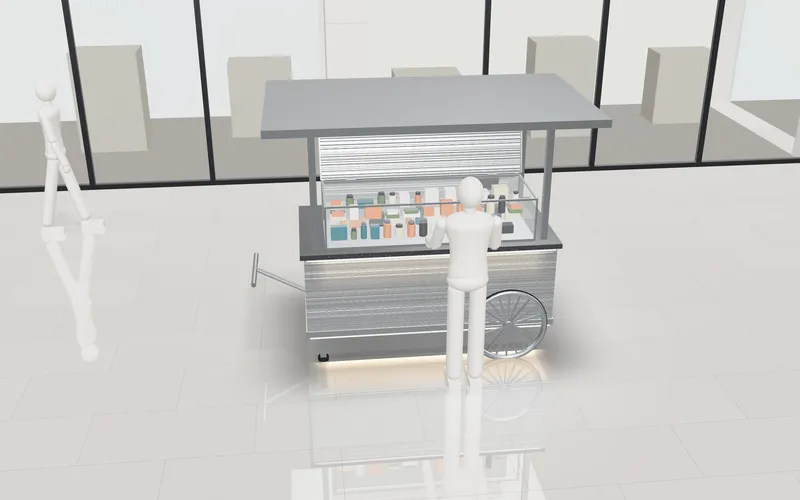
Trade fair and event structure configurators: cost drivers, worked examples and buying questions
What makes a configurator for exhibition stands, bleachers, flagpoles, kiosks or stages cost more, three three-year examples and buying questions.