Enquiries from a washroom and locker configurator: specifiers, contractors, operators and distributors
How toilet cubicle and locker makers sort configurator enquiries by role, route them to sales or distributors, and support specification work.
Short answer: for toilet cubicles and lockers, a configurator does not end in a basket. It ends in a project enquiry. It works best when it already knows who is asking: an architect needs a plan and dimensions for the design, a contractor needs a basis for a price, an operator needs a first impression and a budget, and a distributor needs something to pass on. The enquiry itself should be the same for all of them; what differs is where it goes next.

Why is this a project sale?
Cubicles, duct panels and lockers are planned for one room in one building: a school, a sports centre, an office, a factory. Several parties can be involved before an order. The designer fixes the room and the fit-out, a contractor collects prices, and the operator uses the room for years afterwards. On public projects there may also be a tender in which the work is described in writing.
That leads to the key distinction for the enquiry: the configurator does not replace the design or the quote; it prepares both. The first conversation starts with dimensions, a plan and a chosen specification, and space problems show up before anyone prices the job.
Who enquires, and what does each role need?
In its last step, our example configurator asks who is enquiring: designer or architect, contractor, operator or dealer. The field is implemented; what a manufacturer does with it is project work. The table is a proposal:
| Role | What they need from the enquiry | Proposed next step |
|---|---|---|
| Designer, architect | Dimensioned plan, cubicle sizes, material; later drawings and specification text | Your specification or project team |
| Contractor, fit-out firm | Quantities, sizes, specification, project and site, contact | Sales office for the quote |
| Operator (school, facilities team, employer) | A picture of the room, the look of the finishes, a budget | Regional sales or distributor |
| Dealer, distributor | The complete configuration to pass on | Dealer support, possibly its own entry point |
The role should change the destination, not the enquiry. That keeps every enquiry comparable, whoever sends it.
A second field helps sort enquiries: project and site. It lets your sales office see when several enquiries belong to the same building, for example when the architect and later the contractor configure the same washroom. The demo does not link them automatically; in a project this could be done in your CRM or with a simple project number in the enquiry text.
What belongs in a washroom or changing-room enquiry?
So your sales office can work without a call-back, the enquiry should contain the following. Almost all of it is implemented in the example configurator:
- Room: room type, room depth, overall length.
- Cubicle run: count, width and depth, height, end cubicle with size, door style, lock, row end, duct wall.
- Other fittings: urinals with or without screens, vanity with basin count and mirror.
- Changing room: locker banks, grid per bank, column size, total lockers, sloping top, bench and gap, lock type, carcass and door colours.
- Material: panel material, colour or finish, hardware.
- Checks: every clearance check marked "fits" or "check".
- Contact: name, company, email, phone, project and site, role.
The checks carry information in their own right. A "check" on the corridor in front of the end cubicle tells your sales office what to raise in the first call more clearly than any free-text note. The rules behind them are in washroom cubicle configurator rules.
What does the demo do, and what would be project work?
The washroom cubicle and locker configurator is an example configurator with a fictional product and example values. No manufacturer commissioned or reviewed it. For the sales process it matters to separate exactly what it does today.
Implemented in the demo
- Review before the enquiry: every choice and every check on one page.
- Enquiry text and PDF with the same rows: the review, the enquiry text and the PDF are built by one function. The PDF holds the 3D view, the dimensioned plan, every row, the checks and the contact details. In QA every review row was found in the enquiry text and in the PDFs, tested for the German washroom and changing room and for an English version.
- Contact and role fields: name, company, email, phone, project/site and the enquirer's role.
- Privacy in the preview: entries are not sent or stored; text and PDF are created in the browser only.
- Usage events without content: only the names of features used are counted, such as "open doors" or "plan". In QA no event carried a typed value, name or email address.
Proposed for your project
- Delivery by email or webhook to your sales team. This is part of our usual project scope; in the demo it is switched off on purpose.
- Routing by role or postcode, for example operator enquiries to the regional distributor and specifier enquiries to your project team. Not implemented in the demo; it depends on how your sales are organised today.
- CRM hand-over is assessed case by case. ERP integration, PDF quotes with binding prices and CPQ are not standard for us.
- Budget figures from your own rules, for example per cubicle and material, shown to selected roles only if you prefer.
- Specification text: the same rows could produce a draft clause for specifiers, using your product names and your own wording. This is a proposal; you are responsible for the wording and its technical accuracy.
How do distributors and installers fit in?
If you sell through distributors or installers, there are two options. The simple one: the public configurator sends enquiries to you, and you pass them on. The second: each distributor gets its own entry point, such as a link carrying a dealer code, so enquiries from their area land with them and you receive a copy. Both are project work. What matters is that distributors get the same enquiry, with plan and checks, as your own sales office, not a shortened version.
For distributors the PDF can be the most useful result: it can be forwarded, printed and filed with their own quote, without the recipient opening the configurator.
How can you tell whether it helps sales?
We do not promise figures. What you can measure is what happens in the process:
- how many enquiries come through the configurator, and from which role;
- how often your sales office still has to ask questions, and about what;
- how many enquiries contain a "check" and whether it came up in the conversation;
- which features are used, such as the plan, clearances or opening doors.
The demo's usage events already provide the last item without sending any entries. The first three come from your sales team tagging enquiries.

Example configurator · fictional product
Washroom cubicle & locker configurator
Plan a washroom or changing room: cubicle row, end cubicle, duct wall, urinals and vanity, or locker banks with benches – with a plan view, a clearance check and a PDF enquiry.
Next step
Who this kind of configurator suits, and which capabilities it needs, is covered in locker and washroom cubicle configurator for manufacturers. How the geometry, plan and PDF are built is in building a washroom and locker configurator, and cost in what a 3D configurator costs. For the project process, see custom 3D configurator development.
Frequently asked questions
Should the role be a required field?
That is your choice. In the demo it is optional. A required field helps routing but may put off people who do not fit a role.
Is there a basket?
Not for whole rooms; those are enquired. Spare parts such as locks or hardware could be sold in a shop. That is not implemented in the demo.
Does Modelwright see the enquiries?
In the demo no entries are sent. In your project, enquiries go to the address or webhook you choose.
Sources
- Modelwright library, washroom cubicle and locker configurator, "Live in this demo" list and the demo's privacy note, read 14 November 2026: modelwright.de/en/library/washroom-cubicle-locker-configurator/
- Modelwright, custom 3D configurator development, scope "enquiries by email or webhook", read 14 November 2026: modelwright.de/en/3d-configurator/
Read next
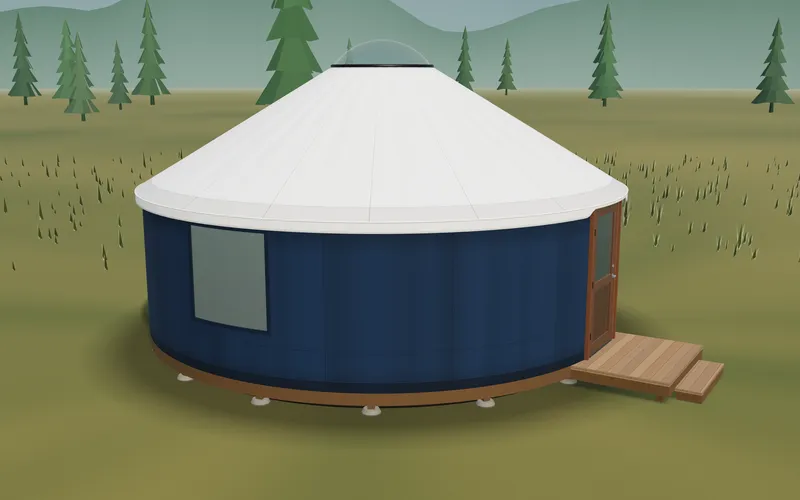
Yurt configurator software for yurt and glamping makers
What a 3D yurt configurator needs: diameter, doors and windows placed around the lattice wall, fabrics, stain, options, a site check and an enquiry.
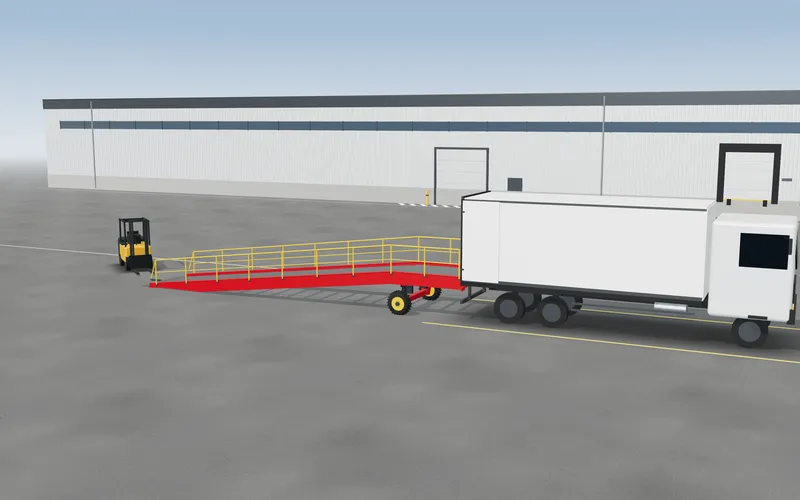
Yard ramp configurator for manufacturers: features, benefits, implementation
What a 3D configurator for mobile yard ramp makers must do: length, bed height, forklift slope, checks, options and an enquiry with a PDF.
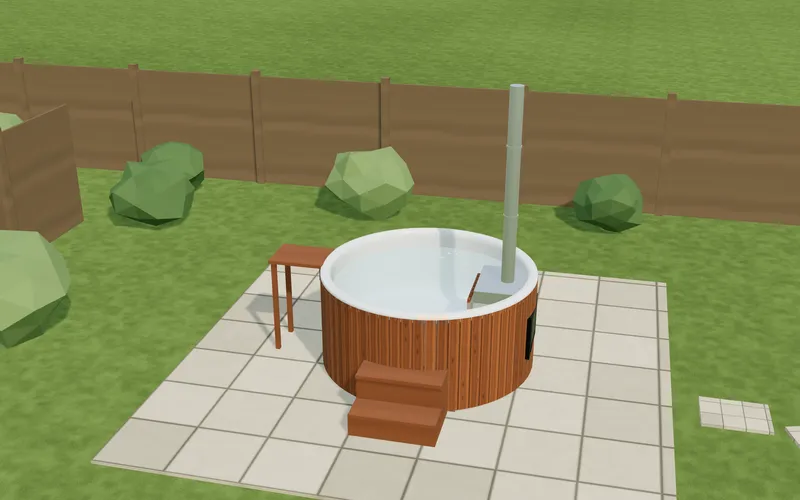
Wood-fired hot tub configurator software for hot tub makers
What a 3D configurator should do for wood-fired hot tub makers: stove type, size, cover, lighting, accessories, a running price and an enquiry.