Agricultural machinery configurator: features, benefits and implementation, shown on a disc harrow
What a 3D configurator can do for farm machinery makers: working width, roller, folding, field run, dealer sales and shows, using a disc harrow.
Short answer: a 3D configurator is worth building for makers of tractor-mounted implements when it shows what a brochure struggles to explain: how the machine folds from working to transport position, what it looks like with the chosen working width and roller, and how it works behind the tractor. If your farm machinery is sold through dealers, the configurator should serve the dealer too, as a tool in the sales conversation and as the route by which an enquiry reaches the right dealer.

Who is this for?
This guide is for managing directors, sales and marketing managers and product managers at makers of tillage, seeding and other mounted implements, and at agricultural machinery dealers with their own range. End buyers are farmers and agricultural contractors; in the sale there is, in our assessment, usually a dealer or area sales manager in between.
A disc harrow is an agricultural implement whose cutting edges are a row of concave metal discs, used to till the soil where crops are to be planted [2]. Short-disc harrows are chosen by working width and roller; how they fold and work is clearer on a moving model than in a brochure [1].
What makes farm machinery different in a configurator?
- Two positions, two sets of dimensions. In the field the working width counts; on the road it is transport width and height. A configurator should show both.
- The machine is part of a tractor combination. It only makes sense with the tractor, and the tractor helps decide which version fits.
- The function is the work in the soil. Discs and roller show their purpose only in motion.
- Sales may run through dealers. Prices, availability and advice then sit with the dealer, not with the maker.
Where does 3D help in farm machinery sales?
In our assessment there are three places, and they complement each other:
- The maker's website: the farmer or contractor sets working width and roller and sees the machine in working and transport position before calling the dealer.
- The dealer's sales conversation: the salesperson shows variants on a tablet that are not in the yard.
- Shows and field days: one model shows the whole range even when only one machine is on display.
With dealer sales, the enquiry itself belongs with the dealer in our assessment. In a project the configurator can pass the configuration to the responsible dealer, for example by postcode; that is not built into the demo. More in enquiries from machinery and loading equipment configurators.
Which capabilities does it need?
| Capability | Why | In the example |
|---|---|---|
| Choose working width | The basic decision in a series | Yes: 4, 5 or 6 m |
| Choose roller | Equipment by use | Yes: packer roller, bar roller or none |
| Working and transport position | Show the folding | Yes |
| Working run | Show the machine at work | Yes |
| Show the tractor | Scale within the combination | Yes |
| Show dimensions | Clarify working and transport sizes | Yes |
| Rules: tractor class, equipment per width | Only combinations you supply | No, built in a project |
| Dealer price, enquiry to the dealer | From model to conversation | No, built in a project |
The "yes" items are on the "Live in this demo" list [1].
What do you gain?
We do not promise figures. The gains are in explaining and demonstrating:
- A demonstration without the machine. Folding and the working run can be shown when the machine is not available or the season is wrong.
- The same view at every dealer. All dealers show the same, current variant.
- Better conversations. A buyer who comes to the dealer already knows which width and roller to look at.
Makers with several implement types can add cultivators, power harrows or seed drills on the same pattern once one machine with working and transport position exists.
What should you settle before the project?
- Who is it for first? End buyers on the website or dealers in the sales conversation. That decides how much technology and how much explanation it shows.
- Which series? One with several widths and options, where advice takes most time today.
- Prices or not? Decide that with your dealers, not against them.
- Where does the enquiry go? To the maker, the responsible dealer, or both.
Try the example
The folding short-disc harrow is an example configurator with a fictional product and example values, built by Modelwright; no manufacturer commissioned or reviewed it [1]. Live in the demo: working width 4, 5 or 6 m, roller (packer roller, bar roller or none), working and transport position with folding, the working run, and the tractor and dimensions on demand [1]. Prices, rules and an enquiry are not built in; the demo shows the visible part of a farm machinery configurator. We recommend viewing it on a desktop.

Example configurator · fictional product
Folding short-disc harrow
A folding short-disc harrow: working width 4, 5 or 6 m, rear roller, working and transport position, with tractor and dimensions – and a working run.
The rules that can sit behind working width, roller and transport position are described in disc harrow configurator: width, roller and transport rules.
How would it be built for your range?
For your product we build the configurator with your series and working widths, your rollers and options, your rules for tractor hitching and combinations, your dealer structure and, if you want them, your list prices. Drawings and photos are often enough; CAD data is used when it suits the web. Other uses in manufacturing are covered in 3D configurators for manufacturers. The project process is on 3D configurator development, the cost factors in what a 3D configurator costs.
Frequently asked questions
Can the configurator check whether the tractor fits?
It can implement your rules, such as a power class per working width, if you supply them. The demo has no such check.
Can dealers show their own prices?
That is a project decision. Options include the maker's list prices, no prices at all or a dealer login; the demo has no prices.
Are the dimensions in the demo real?
No. It is a fictional implement and all dimensions are example values. In a real project the maker is responsible for transport dimensions and road-use information.
Sources
- Modelwright library: folding short-disc harrow, product description and "Live in this demo" list, read 14 November 2026: modelwright.de/en/library/disc-harrow-configurator/
- Wikipedia: Disc harrow, introduction, read 14 November 2026: en.wikipedia.org/wiki/Disc_harrow
Read next
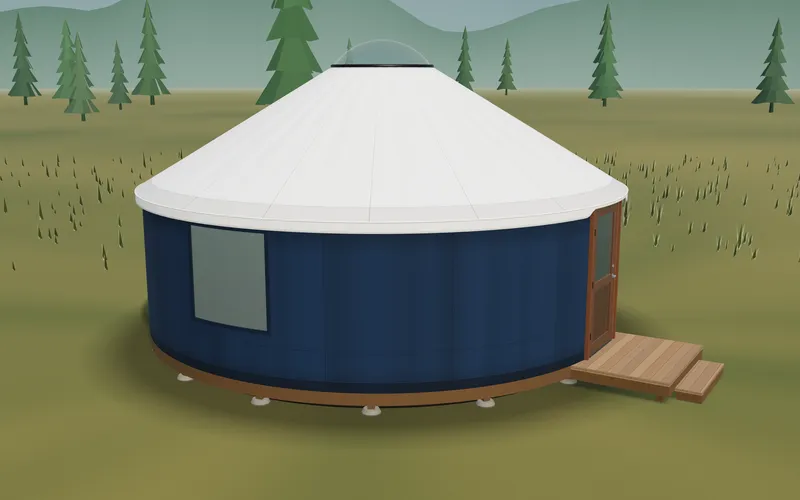
Yurt configurator software for yurt and glamping makers
What a 3D yurt configurator needs: diameter, doors and windows placed around the lattice wall, fabrics, stain, options, a site check and an enquiry.
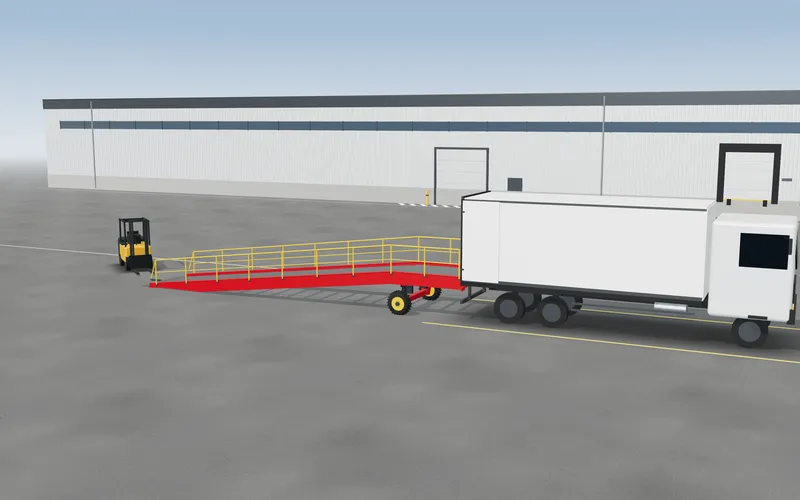
Yard ramp configurator for manufacturers: features, benefits, implementation
What a 3D configurator for mobile yard ramp makers must do: length, bed height, forklift slope, checks, options and an enquiry with a PDF.
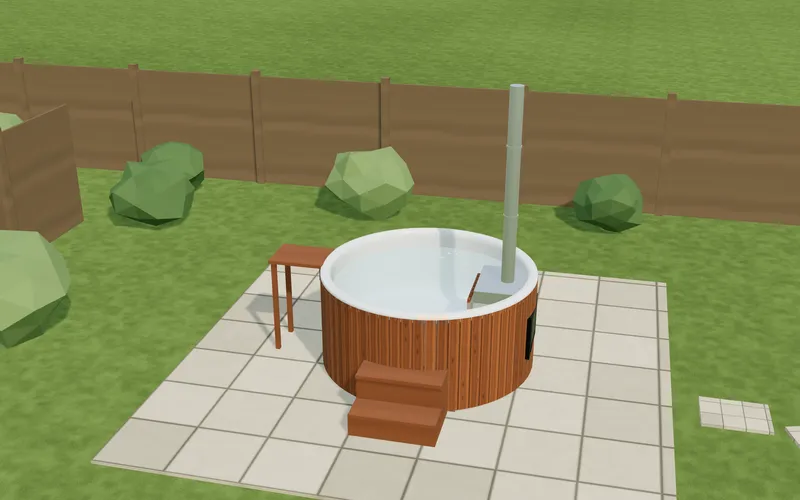
Wood-fired hot tub configurator software for hot tub makers
What a 3D configurator should do for wood-fired hot tub makers: stove type, size, cover, lighting, accessories, a running price and an enquiry.