Machine enclosure configurator rules: panel grid, service access and checks
The rules behind a machine enclosure configurator: size from machine and grid, service zones, doors, head height, ventilation and crane access.
Short answer: a machine enclosure configurator needs rules for three questions. Size: how big does the enclosure become from machine, clearance and panel grid? Access: can maintenance reach every service side, and can the machine come out again later? Equipment: does a machine that gives off heat have ventilation, and one with cables or pipes a pass-through? Our example configurator runs these with example rules; in a project, yours apply.

Which inputs does an enclosure have?
| Input | Example values | What it drives |
|---|---|---|
| Machine | Screw compressor, press, generator set, machining centre, with example sizes and service zones | Minimum size, checks, default panel plan |
| Clearance panel to machine | 300 to 1,500 mm in 100 mm steps | Number of panel fields |
| Panel grid | 1,000 or 1,200 mm | Outside size = fields × grid |
| Extra panels | 0 to 3 per direction | More room inside |
| Panel height | 2,000 to 4,000 mm in 250 mm steps | Head height above the machine |
| Field type per panel | Acoustic panel, vision panel, door, double door, sliding door, vent with silencer, pass-through | Double and sliding doors take two fields |
| Roof | Bolted, removable, crane hatch, roof fan, interior light | Crane access, machine removal, ventilation |
All sizes, service zones and rules are sample values of a fictional product.
How is the enclosure sized?
The enclosure has to surround the machine at the chosen clearance and come out in whole panels. For each direction the demo takes machine size + 2 × clearance + 2 × panel thickness (80 mm), divides by the grid and rounds up. Worked example with the demo's values: the screw compressor is 2,400 × 1,100 mm. With 800 mm clearance on a 1,000 mm grid, the width is (2,400 + 1,600 + 160) / 1,000 = 4.16, so 5 fields or 5.0 m; the depth is (1,100 + 1,600 + 160) / 1,000 = 2.86, so 3 fields or 3.0 m. Inside, that leaves 1,220 mm to the machine at each side and 870 mm at front and rear.
Rounding up is deliberate. In the example the buyer sees at once: up to 1,200 mm clearance the width stays at five fields, and at 700 mm four are enough. Anyone who needs room for a workbench adds extra panels.
How does the configurator check service access?
Each example machine has service zones on certain sides; the compressor has 1,000 mm at the front for controls and filters and 800 mm on the left for the cooler. Each side gets one of three ratings:
- Green: there is a door on that side overlapping the machine side by at least 600 mm (60 % of the door width for narrow doors).
- Amber, inside only: no such door on that side, but the inside clearance is at least as deep as the service zone.
- Red, blocked: neither a door nor enough room.
In the example: at 800 mm clearance there are 1,220 mm on the left, so without a door on that side the cooler is amber, not red. At the front, 870 mm is not enough for the 1,000 mm zone, so that side needs a door. If the buyer cuts the clearance to 500 mm, the enclosure becomes 4.0 m wide, 720 mm remain on the left, and without a left-hand door the check turns red. This follows directly from the example rules in the demo's code; we recomputed it.
Further example rules: at least one door; at least 200 mm head height above the machine; 500 mm inside clearance as a floor; 600 mm free space behind each door; a sliding door needs two neighbouring fields that are acoustic or vision panels. Machines that give off heat need a vent panel or the roof fan, machines with cables or pipes need a pass-through, and the press needs removable roof panels or a crane hatch. For removal, the demo checks whether the widest door lets the machine through or whether it can be lifted out through the roof.
These checks are planning aids with example values. The demo models no acoustics, ventilation sizing, statics or standards.
What data would you supply?
Your grid and panel heights, panel types with widths, minimum clearances, rules for doors per side, your silencer and ventilation options, roof variants (with weights for crane lifts if relevant) and colours. For the machine, a short form is enough for the buyer: size, service sides with depth, heat yes or no, cables and pipes yes or no, crane needed.
What comes out at the end?
The review lists machine, sizes, grid, panel plan, roof, colours, the buyer's target and every check. The enquiry text carries the same rows; the PDF adds a three-quarter view and a top view with service zones. In testing, all 19 summary rows appeared word for word in the text.

Example configurator · fictional product
Acoustic machine enclosure configurator
Plan an acoustic enclosure around a machine: pick the machine and clearance, tap panels to turn them into doors, windows, vents or pass-throughs, set the roof and crane access – with an exploded view, assembly sequence, service check and a PDF enquiry.
Try it in the acoustic machine enclosure configurator. Who it is for is covered in acoustic enclosure configurator software, and the build, including the exploded view and phones, in implementing configurators for stores, booths and enclosures. For a project of your own, see custom 3D configurator development.
Frequently asked questions
Where do the service zones come from?
In the demo, from the example data for each machine. In a project the buyer enters them for their machine, or you store values for typical machine classes.
Does a red check block the enquiry?
No. The enquiry text and PDF are still produced with the check in them, so your sales team knows what to discuss.
Are imperial units available?
The demo is metric only. A switch can be added in a project if you sell into imperial markets.
Sources
- Modelwright library, acoustic machine enclosure configurator, "Live in this demo" list, read 14 November 2026: modelwright.de/en/library/acoustic-machine-enclosure-configurator/
Read next
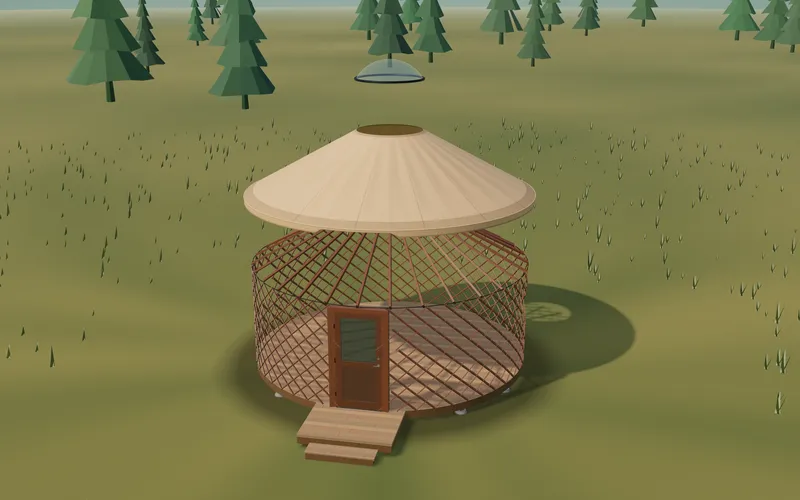
Yurt configurator rules: placing doors and windows on the lattice wall
The rules a yurt configurator needs: wall length per diameter, the space each opening takes, a second door opposite, collision-free dragging, options.
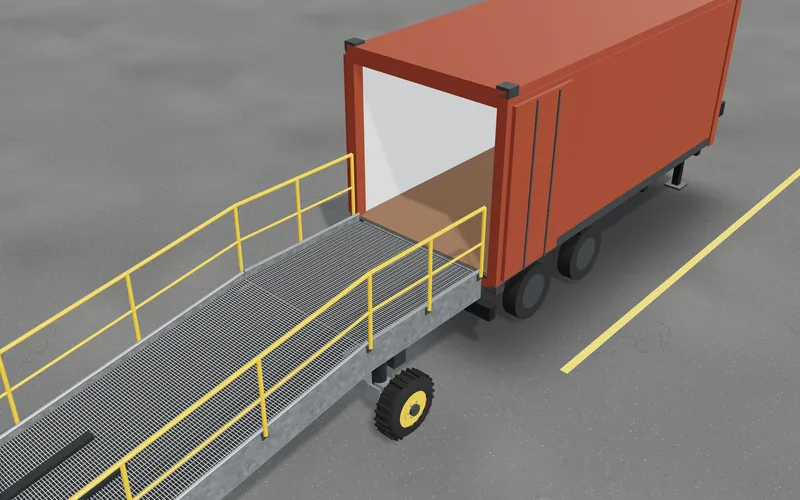
Yard ramp slope, bed height and checks as configurator rules
How a yard ramp configurator calculates slope from length, level-off and bed height, and checks lift range, door opening and forklift clearance.
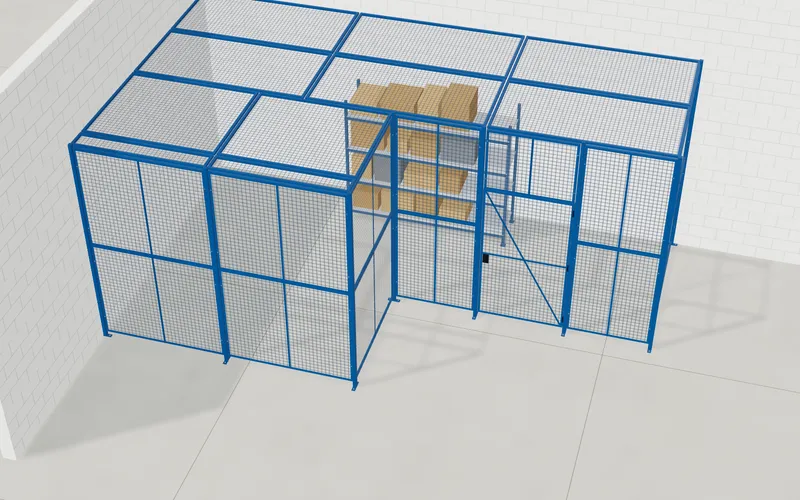
Wire partition planner rules: outline, doors and parts
The rules a wire partition planner needs: outline on a grid, wall lengths, heights, doors and service windows, ceiling and lock, layout checks and parts.