Modular sofa configurator for upholstery manufacturers: features, benefits, implementation
What a 3D sofa configurator should do for makers of modular upholstered furniture: modules, fabrics, room and door checks, example price and showroom use.
Short answer: a 3D sofa configurator earns its place at an upholstery manufacturer when it answers the two questions buyers almost always have before they order a modular sofa: what will it look like in this fabric, and will it fit my living room and get through my door? It builds valid layouts from your modules, shows fabric and legs on the model, checks the room and the delivery route, and then shows a price or prepares an enquiry. The same tool then serves your online shop and the conversation in a furniture store.
This guide is for managing directors, product managers and sales or e-commerce leads at makers of modular upholstery (corner sofas, sectionals, sofas with a chaise or ottoman) and for retailers and interior brands that sell such ranges under their own name. For what a configurator does for a manufacturer in sales more generally, see 3D configurators for manufacturers; this guide covers what is specific to sofas.

Why is a sofa harder to sell online than it looks?
- It is a set of modules. Seat, corner, chaise, arm and ottoman make a straight sofa, an L-shape or a U-shape. Not every combination exists, and the order of modules follows fixed rules.
- The fabric changes the product. Linen, bouclé and velvet read very differently in a room. A colour chip shows neither the texture nor how velvet catches the light.
- It has to fit a particular room. Overall width against the wall, the walkway in front and the door swing are questions buyers ask before they commit, often at the store with a note full of measurements.
- It has to get through the door. What matters is not the size of the finished sofa but the transport size of each module.
A gallery of a few photographed layouts answers only the first of these, and only for the fabrics in the photos.
What should a sofa configurator include?
| Feature | Purpose | In our example configurator |
|---|---|---|
| Layout from modules (straight, chaise, L, U), number of seat modules, mirror | offer only what your range really has | yes: 1–4 seat modules, ottoman, mirrored |
| Seat depth | comfort variants | yes: 95 or 105 cm |
| Fabric and legs | show texture and finish | yes: linen, bouclé, velvet in 7 colours; 4 leg finishes |
| Room size and door width | plan the sofa into the buyer's room | yes, stepless |
| Width, walkway, door swing and delivery checks | catch fit and delivery problems early | yes: green, amber or red |
| Plan view with dimensions and module list | a shared basis for advice and ordering | yes |
| Price | set expectations or sell directly | example price for a fictional brand |
| Enquiry, basket, dealer hand-over | close in the shop or through retail | no, part of a project |
The last row is a sales decision rather than a technical one: whether the configurator sells through your own shop, sends an enquiry to a retailer or simply prepares the store conversation. The options are set out in furniture configurator enquiries, dealers and contract projects.
What does a manufacturer gain?
We do not promise figures. The gains sit at points your sales and service teams can judge for themselves:
- The size question is asked before the order. Once the buyer enters room width, room depth and door width, they see whether the L-shape fits the wall and whether there is still a walkway in front of it.
- Delivery becomes visible. A module carried on end through the door explains better than any note why a large corner sofa can still reach a narrow flat, or why it cannot.
- Store and shop talk about the same sofa. The plan with dimensions and the module list can be shown on a screen in the store and are the same basis as online.
- Fabrics become comparable. The same layout in linen, bouclé or velvet, without a photo for every combination.
Whether this pays off depends on how many calls and complaints at your company come down to sizes and access today. Your sales and after-sales teams know that best.
Where are the limits?
A room check in the browser works with the measurements the buyer types in. It is not a site survey, and it knows nothing about stairwells, tight landings or radiators unless you ask for them as inputs. Our demo says so on its page: the room and door checks are simplified calculations from the inputs, and the prices are examples for a fictional brand, not a quote. In a project, you decide which measurements to ask for and which limits apply.
Try the example
The modular sofa in your own room is an example configurator with a fictional product and example values, built by Modelwright. No manufacturer commissioned, reviewed or approved it. It offers:
- room width, room depth and door width, all stepless;
- straight, chaise, L or U layouts with 1–4 seat modules, an ottoman and a mirrored option;
- seat depth of 95 or 105 cm, linen, bouclé or velvet in 7 colours, and 4 leg finishes;
- width, walkway, door swing and delivery checks in green, amber or red;
- a delivery view in which a module is carried on end through the door;
- a plan view with dimensions, the module list and an example price.
There is no enquiry form, PDF or basket in this demo.
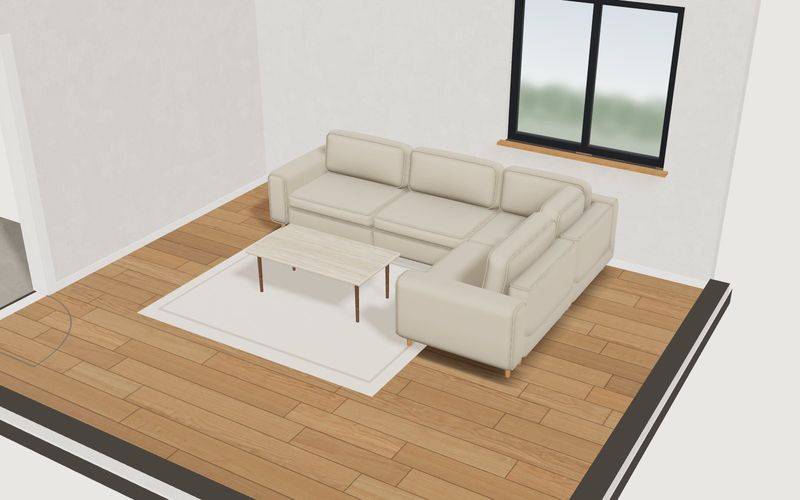
Own demo · fictional product
Modular sofa in your own room
Plan a modular sofa in your own room: room size, walkway and door are checked, and the plan view shows every dimension.
How the module catalogue, the checks and the example price work in detail is explained in room, walkway, door and delivery checks for a modular sofa.
How would it be built for your range?
For your product we build the configurator with your modules and their sizes, your layout rules, your fabric collections and leg options, the transport sizes of your modules, your way of closing the sale (enquiry by e-mail or webhook, shop or retailer) and, if you want them, your prices. Photos, dimensioned drawings and fabric samples are usually enough; we use CAD where it suits the web. What to budget is covered in furniture configurator cost, and how a project runs in custom 3D configurator development.
Frequently asked questions
Can furniture retailers use it in the showroom?
Yes. It runs in the browser with no app, as its own page or embedded. Whether retailers need their own prices or their own enquiry route should be settled before the quote, because it changes the scope.
Can it show our real fabric collections?
Yes, through colour, texture and sheen per fabric type. The demo uses three fabric types that differ in texture and sheen, not only in colour. For your collection we need samples or good scans; a screen is still no substitute for a swatch in the hand.
Does it have to include the room check?
No. Without it the configurator is smaller: modules, fabric, legs and price. The room and door check is a separate building block that pays off where size questions lead to frequent queries.
Sources
- Modelwright library page "Modular sofa in your own room", list "Live in this demo", read 14 November 2026: modelwright.de/en/library/sofa-configurator/
- Demo source code, /assets/mw3d/demos/sofa.js on modelwright.de, checked 14 November 2026.
Examples to try
Own demo · fictional product
Modular sofa in your own room
Plan a modular sofa in your own room: room size, walkway and door are checked, and the plan view shows every dimension.
Read next
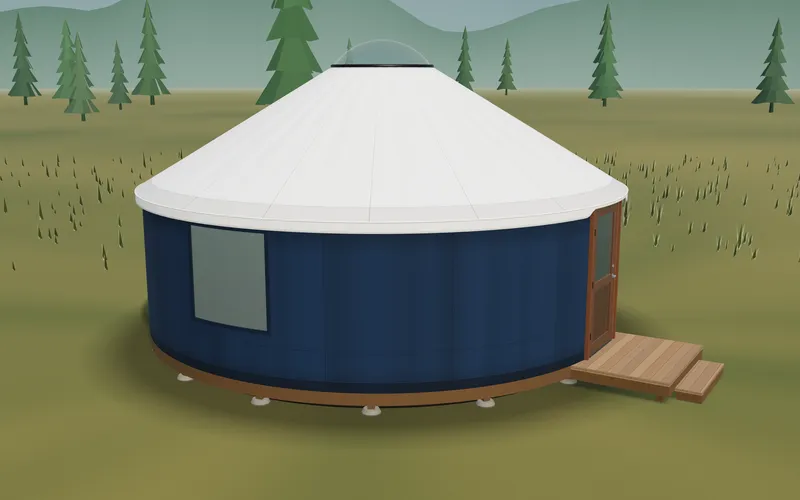
Yurt configurator software for yurt and glamping makers
What a 3D yurt configurator needs: diameter, doors and windows placed around the lattice wall, fabrics, stain, options, a site check and an enquiry.
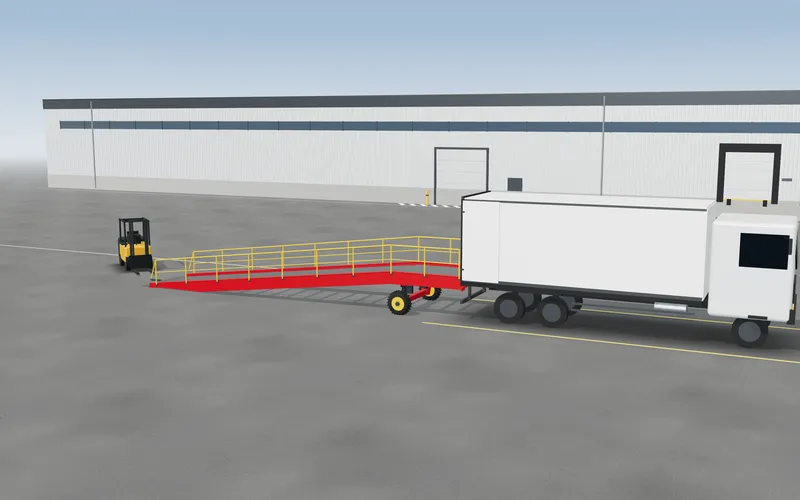
Yard ramp configurator for manufacturers: features, benefits, implementation
What a 3D configurator for mobile yard ramp makers must do: length, bed height, forklift slope, checks, options and an enquiry with a PDF.
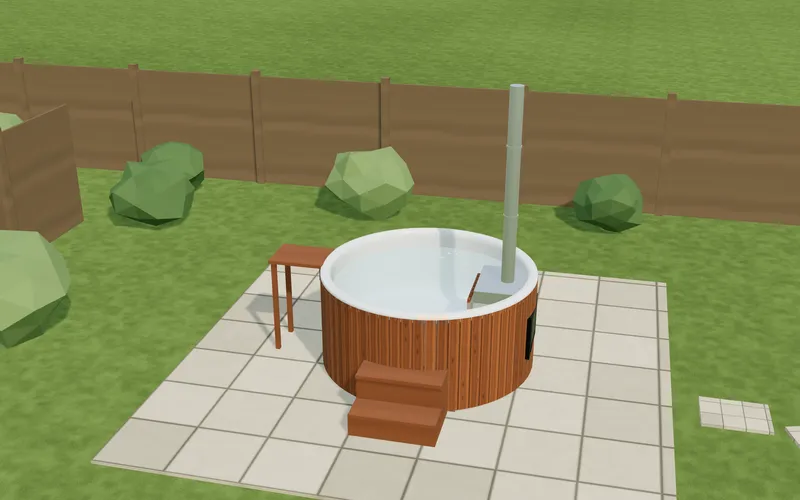
Wood-fired hot tub configurator software for hot tub makers
What a 3D configurator should do for wood-fired hot tub makers: stove type, size, cover, lighting, accessories, a running price and an enquiry.